.svg)
Root Canal Therapy in South Barrington, IL
Save teeth with damaged or infected nerves. Modern root canal therapy is routine, comfortable, and often completed in a single visit.
.svg)
Root Canal Therapy in South Barrington, IL
Root canal therapy (endodontic treatment) saves teeth that would otherwise need extraction. When the nerve inside a tooth becomes damaged by decay, trauma, or infection, a root canal removes the affected tissue, cleans and disinfects the inside of the tooth, and seals it with a biocompatible filling material. The tooth itself remains in place and typically serves for many more years with proper restoration.
Root canals have a reputation for being painful, but the pain most people associate with the procedure is actually the pain of the tooth before treatment, not during or after. Modern root canal therapy with proper anesthesia is comparable to a filling in terms of comfort. Most patients report significant pain relief immediately afterward. At South Barrington Dental Care, Dr. Allison Bartley performs endodontic treatment on most teeth; complex cases may be referred to an endodontist.
What Root Canal Therapy Is
Each tooth contains a pulp chamber (center) and root canals (channels running down each root) that hold nerve and blood vessel tissue. When this tissue is damaged by deep decay, trauma, or bacterial infection, it cannot heal on its own and must be removed to save the tooth. A root canal removes the affected tissue, thoroughly cleans the inside of the tooth, and seals it with a rubber-like material called gutta-percha. A crown is typically placed afterward to protect the tooth.
Signs You May Need a Root Canal
- Severe, persistent toothache
- Pain that worsens with hot or cold (especially if it lingers after removing the stimulus)
- Pain when biting or chewing
- Swelling around a tooth
- A pimple-like bump on the gum near a tooth (fistula)
- Darkening of a single tooth
- A broken tooth with visible nerve exposure
Benefits of Root Canal Therapy
- Saves the natural tooth (usually the best long-term outcome)
- Eliminates infection and associated pain
- Restores normal biting and chewing function
- Prevents the spread of infection to surrounding tissues
- Maintains jaw bone in the area (extraction would require implant or bridge to prevent bone loss)
- Less invasive than extraction and replacement
- Often completed in 1-2 visits
The Root Canal Process Step by Step
Step 1: Diagnosis. Digital X-rays (and sometimes 3D Cone Beam imaging) confirm the need for root canal therapy and map the canal anatomy.
Step 2: Anesthesia. Local anesthesia numbs the tooth. Patients with dental anxiety can discuss sedation options.
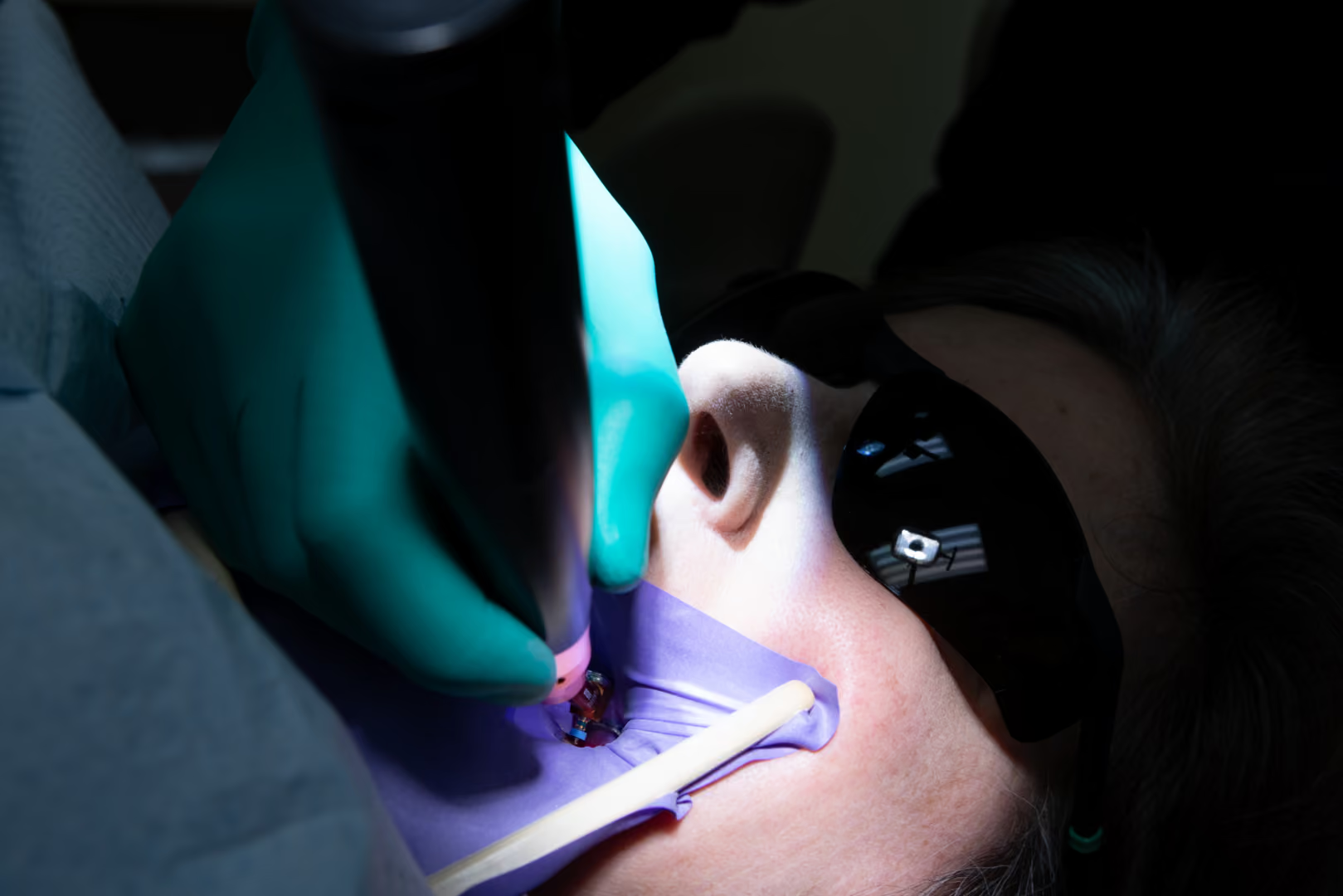
Step 3: Isolation. A rubber dam is placed around the tooth to keep the area clean and dry.
Step 4: Access. A small opening is made in the top of the tooth to reach the pulp chamber.
Step 5: Cleaning and Shaping. The damaged nerve tissue is removed, and the root canals are cleaned, shaped, and disinfected using specialized files and irrigants.
Step 6: Filling. The cleaned canals are filled with gutta-percha and sealed.
Step 7: Temporary Filling. A temporary filling closes the access opening until a permanent restoration is placed.
Step 8: Permanent Restoration. A crown (often a CEREC same-day crown) is placed to protect the tooth. This is typically done in a separate visit.
Timeline
- Root canal procedure: 60-90 minutes for single-canal teeth, 90-120 minutes for multi-canal teeth
- Typical visits: 1-2 visits depending on complexity
- Crown placement: Typically 1-4 weeks after root canal, or same-day if CEREC is used
- Healing: Mild discomfort for 2-3 days, fully resolved within 1-2 weeks
- Long-term outcome: 85-95% success rate, often providing decades of service
Cost Factors
Root canal costs depend on the tooth (front teeth are typically less expensive than back teeth due to fewer canals) and complexity. Most PPO dental insurance plans cover 50-80% of endodontic treatment after deductible. Remember that a root canal is almost always followed by a crown, which is a separate fee.
We provide transparent written estimates before treatment. See our finance and insurance page for financing options.
Risks and Limitations
Incomplete disinfection. Complex root canal anatomy occasionally prevents complete cleaning. Most cases are successful; occasional retreatment or referral to an endodontic specialist may be needed.
Tooth fracture. Root canal-treated teeth are more brittle than healthy teeth and are at higher risk of fracture if not crowned. A crown after root canal therapy is essentially required for molars.
Need for retreatment. In roughly 5-15% of cases, retreatment or surgical endodontics becomes necessary after years.
Post-op discomfort. Mild to moderate discomfort for 2-3 days is normal. Severe prolonged pain is uncommon and should be evaluated.
Discoloration. Root canal-treated front teeth can sometimes darken over time. Internal bleaching or a crown/veneer corrects this.
Who Is a Good Candidate
- Patients with damaged or infected tooth pulp
- Patients with severe persistent toothaches
- Patients with abscessed teeth
- Patients who want to save the natural tooth rather than extract and replace
- Patients in good general health
Who Is NOT a Good Candidate
- Patients with teeth that are too damaged to restore even after endodontic treatment
- Patients with severe periodontal disease around the affected tooth (may need extraction)
- Patients with specific medical conditions requiring alternative approaches
- Teeth that have failed previous root canal treatment (may need endodontic specialist or extraction)
Comparison: Root Canal vs. Extraction and Replacement
Root canal with crown: Preserves the natural tooth, maintains bone, preserves chewing function. Long-term success rate 85-95%. Moderate cost.
Extraction and implant: Removes the problem tooth and replaces it with a titanium implant and crown. Very long-term solution. Higher total cost over time but sometimes more predictable.
Extraction and bridge: Fixed replacement using adjacent teeth as anchors. Requires preparing otherwise-healthy teeth.
Extraction without replacement: Lowest cost but allows adjacent teeth to drift and the opposing tooth to over-erupt. Not recommended for most teeth.
Saving the natural tooth is usually the best option when feasible.
Alternatives
- Extraction and dental implant
- Extraction and dental bridge
- Referral to an endodontist for complex cases
- Monitoring only (rarely appropriate; most cases worsen)
Provider Authority
Dr. Allison Bartley performs root canal therapy on most teeth. Complex cases (severely curved canals, previously treated teeth, calcified canals, molars with unusual anatomy) may be referred to an endodontic specialist for best outcomes. The decision is always made in the patient’s best interest.
Serving the Northwest Suburbs
Patients come for root canal therapy from South Barrington, Inverness, Streamwood, Hoffman Estates, Palatine, Schaumburg, and Arlington Heights.

.svg)
.svg)
.svg)
Common Questions About Root Canal Therapy
Is a root canal painful?
The procedure itself is not painful with proper anesthesia. Most patients compare it to getting a filling. The pain most people associate with root canals is the pain of the tooth before treatment; most patients feel significantly better afterward.
How long does a root canal take?
60-90 minutes for single-canal teeth (front teeth), 90-120 minutes for multi-canal teeth (molars). Some cases can be completed in a single visit; others benefit from two visits.
Do I need a crown after a root canal?
In most cases, yes. Root canal-treated teeth are more brittle and benefit from full-coverage protection. CEREC same-day crowns are often used.
How long will the tooth last after a root canal?
With proper restoration (a crown) and good oral hygiene, root canal-treated teeth often last decades. Success rates are 85-95%.
Can I drive after a root canal?
Yes, unless you received sedation. Local anesthesia alone does not impair driving.
South Barrington Dental Care has been serving patients in the Northwest Suburbs of Chicago for years and has built a strong local reputation for comprehensive, patient-centered care. Dr. Allison Bartley leads the practice and the all-female clinical team.
Schedule A Root Canal Consultation at South Barrington Dental Care
Serving patients across South Barrington, Inverness, Streamwood, Hoffman Estates, Palatine, Schaumburg, and Arlington Heights.