.svg)
Dental Crowns in South Barrington, IL
Durable, natural-looking porcelain and ceramic crowns for cracked, broken, or heavily restored teeth. Fabricated with precision digital impressions for a lasting, comfortable fit.
.svg)
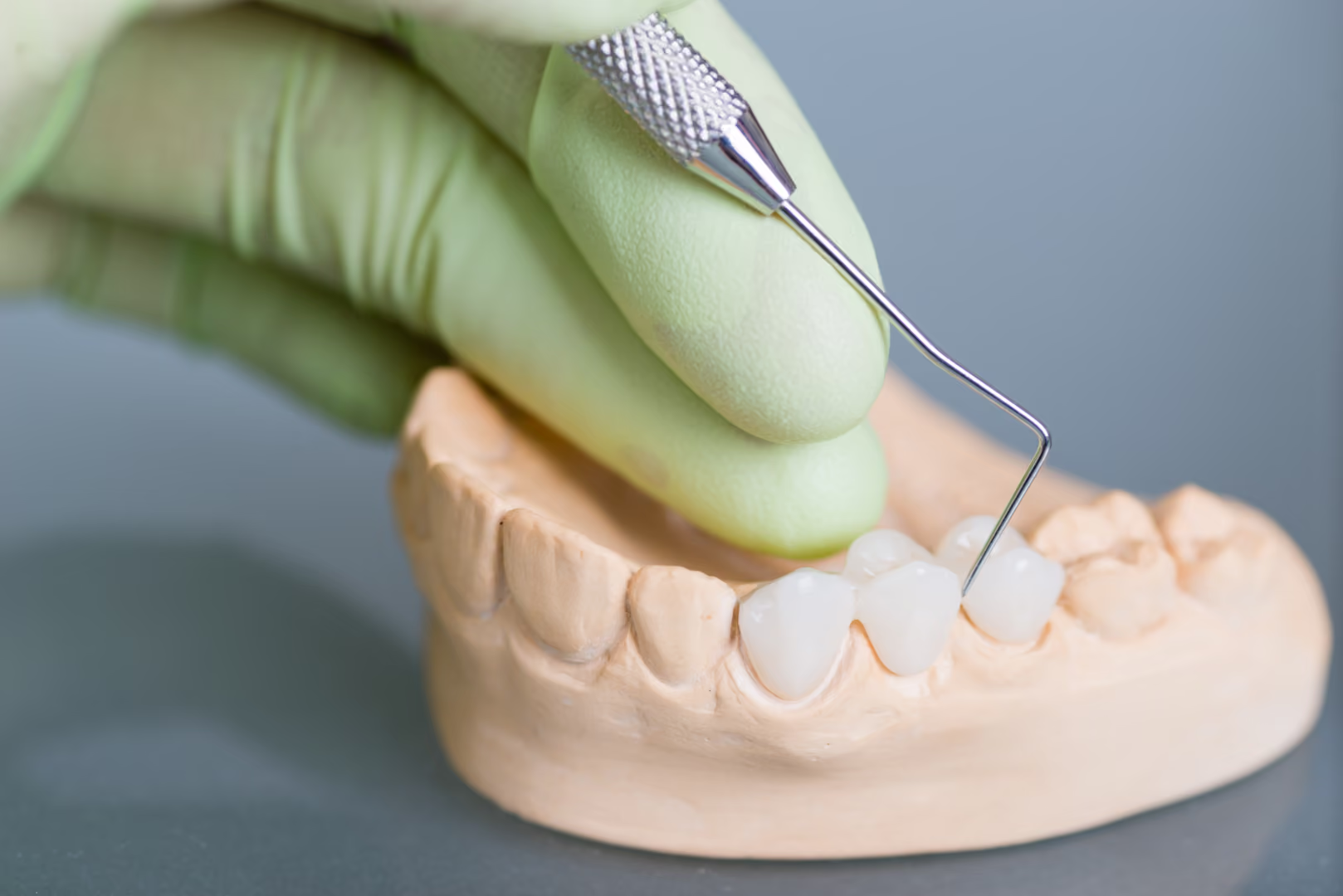
Dental Crowns in South Barrington, IL
A dental crown is a full-coverage restoration placed over a tooth to restore strength, shape, and appearance. Crowns are the right choice for teeth that are cracked, heavily restored, structurally weakened after a root canal, or too damaged to hold a filling. At South Barrington Dental Care, we offer both traditional lab-made crowns and CEREC same-day crowns depending on what is best for your specific tooth. Both options use high-strength ceramic that looks and functions like natural tooth enamel.
Dr. Allison Bartley takes a conservative approach to crown cases: we crown teeth that genuinely need crowns and recommend more conservative alternatives (like bonding or large composite fillings) when they are clinically appropriate. When a crown is the right answer, we use digital impressions and careful planning to produce a restoration that looks natural and lasts 15 years or more.
What a Dental Crown Is
A crown is a tooth-shaped cap bonded over the entire visible portion of a tooth. Modern crowns use tooth-colored ceramic materials (porcelain, zirconia, or lithium disilicate) selected based on the tooth’s location and chewing demands. Once bonded, a crown protects the underlying tooth and restores normal biting, chewing, and appearance.
Benefits
- Restores full function to a damaged tooth
- Protects cracked or weakened teeth from further damage
- Long-lasting (typically 15+ years with proper care)
- Natural-looking when made from modern ceramics
- Covers and protects teeth after root canal therapy
- Anchors dental bridges when multiple teeth are missing
- Restores heavily worn or fractured teeth
When a Crown Is Recommended
- Cracked or fractured teeth
- Teeth with large existing fillings at risk of breaking
- Teeth that have had root canal therapy
- Severely worn teeth
- Discolored or misshapen teeth (cosmetic crown)
- Teeth supporting a dental bridge
- Teeth restoring dental implants
The Crown Process Step by Step
Step 1: Exam and Planning. Digital X-rays and a clinical exam determine whether a crown is needed and what material is best. Dr. Allison Bartley reviews the plan with you, including pricing, before anything proceeds.
Step 2: Anesthesia and Preparation. Local anesthesia numbs the tooth. The tooth is shaped to make room for the crown while preserving as much natural tooth structure as possible.
Step 3: Digital Impression. An 3D scanner captures a 3D model of the prepared tooth and surrounding teeth in about 2 minutes.
Step 4: Temporary Crown. A temporary crown protects the tooth while the permanent crown is being made (for traditional lab-made crowns). For CEREC same-day crowns, no temporary is needed.
Step 5: Fabrication. Traditional crowns are made in a lab over 2-3 weeks. CEREC crowns are milled in-office in about 20 minutes.
Step 6: Delivery and Bonding. The permanent crown is tried on, adjusted for fit and bite, and bonded into place.
Step 7: Follow-Up. A check-in confirms the crown is comfortable and functioning well.
Timeline
- Traditional lab-made crown: Two visits over 2-3 weeks
- CEREC same-day crown: Single visit, 90-120 minutes
- Permanent crown lifespan: 15+ years with proper care
Cost Factors
Crown costs depend on the material, location in the mouth, and complexity. Most PPO dental insurance plans cover 50-80% of crown costs after deductible when medically necessary (fractured tooth, post-root-canal protection, etc.). Cosmetic-only crowns are typically not covered.
We provide written estimates before treatment begins. CareCredit financing are available. See our finance and insurance page.
Risks and Limitations
Tooth sensitivity. Temporary cold sensitivity is common and typically resolves in 1-2 weeks.
Need for root canal. In a small percentage of cases, a prepared tooth develops pulp inflammation and requires root canal therapy.
Crown failure. Crowns can eventually chip, wear, or come loose, usually after 15+ years. Replacement is typically straightforward.
Decay under the crown. If oral hygiene lapses, decay can develop at the margin where the crown meets the tooth. Regular cleanings and exams help prevent this.
Porcelain can fracture. Rare but possible, especially in patients who grind without a night guard.
Who Is a Good Candidate
- Patients with cracked, heavily restored, or structurally weakened teeth
- Patients who have had or need root canal therapy
- Patients with severely worn teeth from grinding
- Patients needing cosmetic improvement on a damaged tooth
- Patients in good general oral health
Who Is NOT a Good Candidate
- Patients with small cavities that can be restored with a filling
- Patients with active gum disease (treat first)
- Patients with severely compromised teeth that cannot support a crown (may need extraction and implant)
- Patients unwilling to commit to a night guard if they grind heavily
Comparison: Crown vs. Large Filling vs. Onlay
Crown: Full coverage, very durable, moderate preparation, best for structurally compromised teeth.
Large composite filling: Partial coverage, less durable for heavily damaged teeth, minimal preparation, best for moderate damage.
Onlay: Partial coverage (covers cusps but not the full tooth), durable, moderate preparation, middle ground between filling and crown.
The right choice depends on how much natural tooth structure remains and how much chewing force the tooth needs to handle.
Alternatives
- Composite fillings for smaller damage
- CEREC same-day crowns for patients who want faster results
- Dental bridges when a missing tooth is adjacent
- Extraction and implant when a tooth cannot be saved
Provider Authority
Dr. Allison Bartley places crowns using digital impressions (3D scan) and modern ceramic materials. Our practice is equipped for both traditional lab-made crowns and CEREC same-day crowns, which means we can recommend the best option for each specific case rather than being limited by available technology.
Serving the Northwest Suburbs
Crown patients come from South Barrington, Inverness, Streamwood, Hoffman Estates, Palatine, Schaumburg, and Arlington Heights.

.svg)
.svg)
.svg)
Common Questions About Dental Crowns
How long do dental crowns last?
With good oral hygiene and regular dental care, modern ceramic crowns typically last 15-20+ years. Heavy grinders or patients with poor hygiene may see shorter lifespans.
Do crowns hurt?
Crown preparation is done under local anesthesia and is painless. Post-treatment sensitivity is usually mild and resolves within 1-2 weeks.
Does insurance cover crowns?
Most PPO dental insurance plans cover 50-80% of crown costs after deductible when the crown is medically necessary (cracked tooth, post-root-canal, etc.). Purely cosmetic crowns are usually not covered.
Can a crown be done in one visit?
Yes, with CEREC technology the crown can be designed, milled, and bonded in a single appointment.
What if my crown comes off?
Save the crown, avoid chewing on that side, and call us at (847) 382-0700. In most cases the existing crown can be re-cemented in a short visit.
South Barrington Dental Care has been serving patients in the Northwest Suburbs of Chicago for years and has built a strong local reputation for comprehensive, patient-centered care. Dr. Allison Bartley leads the practice and the all-female clinical team.
Schedule A Crown Consultation at South Barrington Dental Care
Serving patients across South Barrington, Inverness, Streamwood, Hoffman Estates, Palatine, Schaumburg, and Arlington Heights.